Navigating the Practical Barriers of Service Design
While the previous blog post explored the misconceptions around “service resistance”, Part 2 looks at the partial reality of why individuals often bypass formal supports. When we look closely at the architecture of the current system, we find that "avoidance" is often a calculated survival strategy. In cities from Toronto to Edmonton, the decision to remain outside is frequently based on an assessment of safety, autonomy, and feasibility.
The Safety-Utility Trade-off
For many, the biggest reason to avoid shelter is fear, not necessarily a fear of help, but a fear of harm. Large, congregate shelters can be chaotic and unpredictable, especially for those already managing the effects of trauma or PTSD.
When reports of theft, physical violence, or harassment become common, a person must weigh the benefit of a warm bed against the risk of losing their belongings or their physical well-being. In this context, choosing a tent in a quiet, secluded area is not resistance, but a calculated move to maintain a predictable environment and a sense of personal security (Invisible People, 2021).
Operational Barriers: When Rules Create Exclusion
Even when safety is not the primary concern, the fine print of service delivery can quietly shut people out. Many traditional shelters operate on a compliance-first model that often clashes with the realities of survival.
Rigid curfews often negate the very things that help people get back on their feet, such as night-shift work. If a shelter’s rules force someone to choose between a bed and their paycheck, the “help” becomes a barrier to their long-term stability.
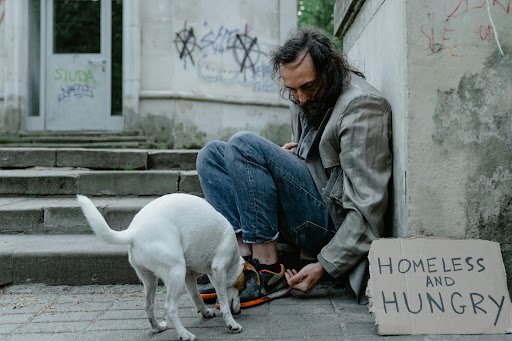
Most facilities are also not equipped to handle pets or allow couples to stay together. For many, a partner or a pet is their only source of emotional support and safety. Being asked to abandon these connections is a price many are understandably unwilling to pay (Invisible People, 2021).
Policies like frequent bag checks and limited daytime access can make supportive spaces feel restrictive rather than welcoming.When a system prioritizes administrative control over individual dignity, it naturally sees a drop in engagement (Gaetz et al., 2013).
Learned Displacement and Systemic Gaps
The Canadian homelessness sector is often a complex maze of intake forms, eligibility checks, and separate waitlists. Seelos and Mair (2021) describe this as a fragmented system where the path to a permanent home is rarely a straight line. In cities like Hamilton and Edmonton, after cycling through emergency rooms and temporary mats only to be told they don’t “qualify” for a specific housing program, many people experience learned disappointment. They stop reaching out not because they lack motivation, but because the system has repeatedly failed to offer a stable, long-term path forward. The real issue is often a system that demands perfection and compliance before it offers the security of a front door with a lock.
References
Invisible People. (2021). The myth that homeless people are service-resistant.
https://invisiblepeople.tv/the-myth-that-homeless-people-are-service-resistant/
Seelos, C., & Mair, J. (2021). Homelessness: A system perspective. Stanford PACS Center.
https://pacscenter.stanford.edu/wp-content/uploads/2021/04/Homelessness_A-System-Perspective_Seelos_GIIL_002_2021.pdf
Gaetz, S., et al. (2013). The State of Homelessness in Canada. Canadian Observatory on Homelessness. https://www.homelesshub.ca/SOHC2013
%20(1).png)


