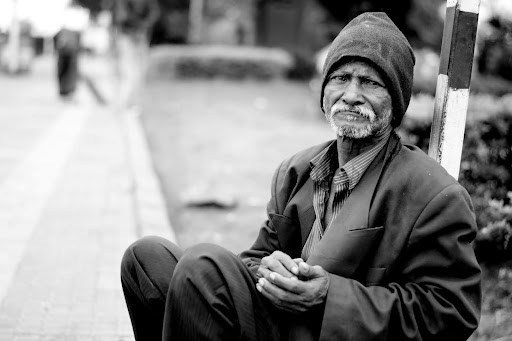
Why Senior Homelessness is Canada’s Quietest Crisis
For decades, the “Golden Years” were a symbol of stability in Canada. Today however, a growing number of seniors are facing a reality they never imagined; losing their homes at the age of 65, 70, or even 80. As the cost of living outpaces fixed pension, the “silver tsunami” is hitting the Canadian shelter system with devastating force (Burnes et al., 2021).
The Fixed Income Trap
The primary driver of senior homelessness is a simple, brutal math problem. Most seniors rely on fixed incomes like Old Age Security (OAS) and the Guaranteed Income Supplement (GIS). While these programs provide a baseline, they have not kept up with the explosive rise in Canadian rent prices. When a senior on a fixed income faces a “renoviction” or a sudden increase, they are often priced out of the entire market. Unlike younger workers, they cannot easily increase their earnings to match a 20% rent hike (McDonald et al., 2016).
The Projections
Senior homelessness is not just growing but on track to become an unmanageable crisis. The 2024 Point-in-Time counts show this trend accelerating with over 146,000 people aged 55+ experiencing homelessness in a single year, with nearly half of them living unsheltered. Without immediate, significant intervention, the number of unhoused seniors could triple by 2030 (Invisible People, 2026).
The Shock of First-Time Homelessness
What makes this crisis unique is that many of these seniors are “first-time homeless”. These are individuals who have never struggled with chronic instability, yet find themselves in a shelter for the first time in their 70s. This transition is uniquely traumatic as shelters are often designed for a younger, more mobile generation. These shelters often lack the accessibility features or medical support that this population requires for aging bodies. For a senior, the loud, chaotic environment of a traditional shelter can lead to a rapid decline in physical health (Invisible People, 2026).
Systemic Invisibility
Researchers often highlight how fragmented services fail to catch those who do not fit the traditional profile of someone in need. Since many seniors do not show the “typical” signs of long-term street involvement, they are often overlooked by outreach teams until they are in a state of absolute medical or housing crisis. In many Canadian cities, the "aging in place” philosophy is failing because there is no “place” left to age that is truly affordable (Seelos & Mair, 2021).
Age Friendly Housing
This issue will be persistent within Canada until actionable change is put in place. Canada needs a targeted approach that includes rent supplements specifically designed for seniors, legal protections against the eviction of tenants over 65, and the integration of healthcare into social housing. As a country we must ensure that the social safety net does not have holes so large that an entire generation falls through them (Burnes et al., 2021).
Rebuilding the Foundation of Care
Ultimately, addressing the “silver tsunami” requires us to stop viewing senior homelessness as an individual tragedy and start seeing it as a predictable result of a system that has become out of sync with human needs. When we prioritize the financialization of housing over the stability of our elders, we lose more than just affordable units, we lose the dignity of our communities.
Burnes, D., et al. (2021). The growing crisis of older adult homelessness in Canada. Canadian Observatory on Homelessness. https://www.homelesshub.ca/resource/growing-crisis-older-adult-homelessness-canada
Invisible People. (2026). Senior Homelessness Is A Neglected Crisis – And It’s Getting Worse. https://invisiblepeople.tv/senior-homelessness-is-a-neglected-crisis-and-its-getting-worse/
McDonald, L., et al. (2016). Homelessness and the older adult. In S. Gaetz et al. (Eds.), The State of Homelessness in Canada.
Seelos, C., & Mair, J. (2021). Homelessness: A system perspective. Stanford PACS Center. https://pacscenter.stanford.edu/wp-content/uploads/2021/04/Homelessness_A-System-Perspective_Seelos_GIIL_002_2021.pdf
%20(1).png)


